

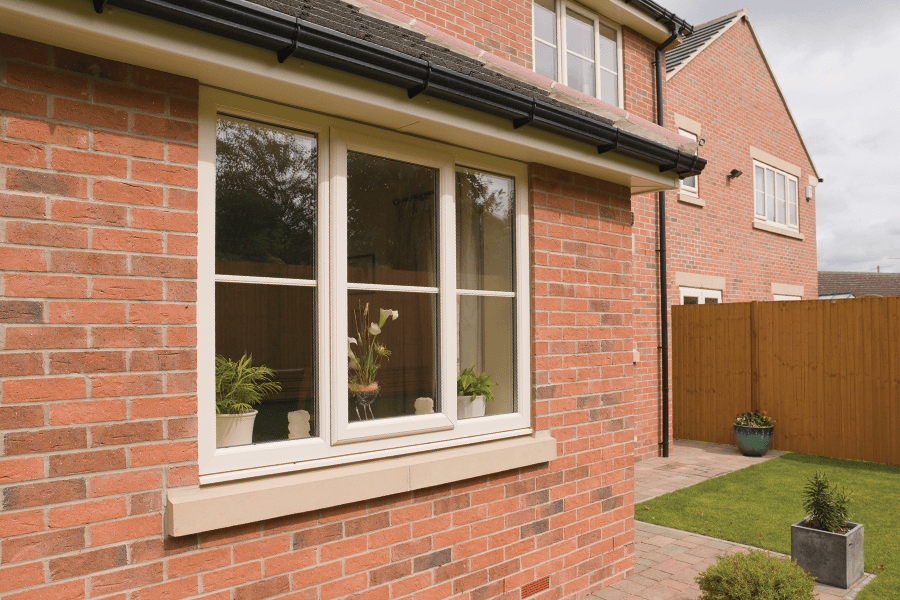
If you’re looking to reduce heat loss and keep your home comfortable throughout the year, replacing older windows can help. Modern uPVC casement windows are designed to improve insulation, limit draughts and reduce the amount of heat escaping from your home.
At DNA Window Solutions, we supply and install energy-efficient windows in a range of styles. Our uPVC casement windows combine multi-chambered profiles with high-performance glazing to support excellent thermal performance.
Here’s what makes these windows efficient and what to consider when choosing them.
How do multi-chambered uPVC frames work?
uPVC stands for unplasticised polyvinyl chloride. It’s a durable, low-maintenance material commonly used for modern window frames.
Multi-chambered uPVC frames contain several internal sections that trap pockets of air. These help slow heat transfer through the frame, reducing energy loss and helping maintain a consistent indoor temperature.
Our Profile 22 uPVC casement windows use this type of construction, combining insulation with a secure, durable design. The frames are also resistant to moisture and require little maintenance beyond occasional cleaning with a damp cloth.
Find out more about our uPVC casement windows and explore the benefits of our wider uPVC window range.
Double glazing or triple glazing: which is better?
The glass plays an important role in a window’s overall energy efficiency. Double glazing uses two panes separated by a sealed cavity containing air or an insulating gas, such as argon. This slows heat transfer and helps reduce heat loss.
Triple glazing adds a third pane and another cavity. It can provide additional insulation and help reduce external noise, although it isn’t automatically the best choice for every property. High-performance double glazing can already deliver excellent thermal performance.
We offer double and triple glazing options across our window range. The best choice depends on your property, budget and insulation requirements, so it’s worth discussing the available configurations with our team.
How do Low-E coatings improve insulation?
Low-emissivity (Low-E) glass has a thin, transparent coating that reflects heat back into your home while allowing natural daylight through. This helps retain warmth and improve the thermal efficiency of the glazing.
Low-E coatings can be combined with double or triple glazing. Argon gas can also be used in the sealed cavity between panes to reduce heat transfer further.
The precise glazing specification matters, so ask our team about the options available for our uPVC casement windows when requesting a quote.
How do window seals prevent heat loss?
Gaps around a window can allow warm air to escape and cold air to enter, creating draughts and making rooms harder to heat.
Effective window seals help create a tight fit when the casement is closed. The locking system also pulls the opening sash firmly against the frame, supporting a secure closure.
Professional installation is equally important. Accurate measurements, correct fitting and proper sealing help prevent unwanted air movement and maintain the window’s overall energy efficiency.
If you’re considering replacing older windows, explore our full range of window styles to see which options could suit your property.

Understanding window energy ratings and U-values
U-values and Window Energy Ratings (WERs) are useful measures when comparing efficient windows.
A U-value measures how easily heat passes through a material or building element. It’s expressed in watts per square metre kelvin (W/m²K). A lower figure means better insulation, as less heat passes through the window.
Our uPVC casement windows achieve a U-value of 1.2 W/m²K with double glazing, helping to reduce heat loss and keep your home comfortable.
The British Fenestration Rating Council (BFRC) uses a scale from A++ to E for Window Energy Ratings. These consider several factors, including heat loss, solar gain and air leakage.
With double glazing, our uPVC casement windows achieve an A+ energy rating, giving you confidence in their thermal performance.
These figures are useful when comparing replacement windows, but overall performance depends on the complete frame and glazing specification.
What are the benefits of energy-efficient windows?
Choosing efficient windows can improve comfort and help reduce energy consumption. The main benefits include:
- Lower heating bills: Better insulation helps reduce heat loss, potentially lowering the energy needed to keep your home warm.
- A more comfortable living environment: Improved thermal performance can reduce cold spots and help maintain a consistent indoor temperature.
- Less internal condensation: Warmer internal glass surfaces can reduce condensation, although good ventilation remains important.
- A quieter home: Double and triple glazing can help reduce external noise, depending on the glass specification.
- A smaller carbon footprint: Using less energy to heat your home can help reduce associated carbon emissions.
The savings and improvements will depend on your existing windows, the replacement specification and how your home is heated.
Why choose DNA Window Solutions?
At DNA Window Solutions, we supply and install windows across Plymouth, Devon and Cornwall. With more than 25 years of industry experience, we can help you compare materials, glazing options and styles to find a suitable solution for your property.
Our uPVC casement range combines multi-chambered frames with energy-efficient glazing, achieving an A+ energy rating and a U-value of 1.2 W/m²K with double glazing.
We also offer aluminium windows and timber windows, giving you a choice of materials to suit different properties and architectural styles.
Get a free quote for energy-efficient windows
If your existing windows are draughty or you’re looking to improve your home’s insulation, modern uPVC casement windows could be worth considering.
Our team can help you explore the available styles and glazing specifications to find the right option for your home.
To discuss your requirements or arrange a free quote, call 01752 938120 or visit our contact page.